live · 2026
MCP Doctor
An open-source, local-first CLI that turns common MCP configuration failures into clear, actionable fixes.
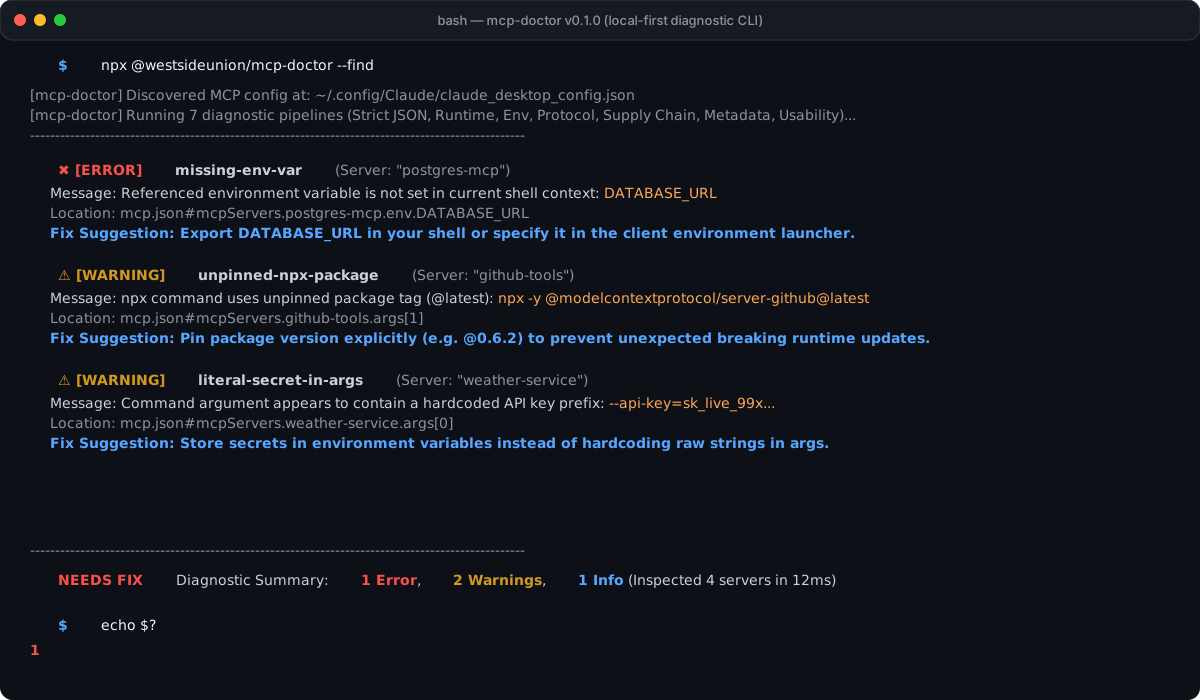
Problem
MCP configuration and environment failures often look like agent crashes, creating friction and slow debugging cycles.
Role & Contribution
Product Concept, System Architecture, CLI Design, Open-Source Engineering
Duration
Open source (v0.1.0)
Status / Outcome
live
Context: The MCP configuration debugging gap
Model Context Protocol (MCP) allows AI agents to connect to local tools and data sources. However, when an MCP server fails to start, developers often struggle to isolate the root cause. Apparent agent failures frequently stem from unglamorous configuration issues:
- Malformed JSON syntax or illegal trailing commas
- Executables present in terminal shells but missing from GUI application
PATHenvironments - Referenced environment variables or secret API keys left unexported
- Unpinned
npxor package runners triggering interactive prompts during silent background startup - Logging statements written to
stdoutbefore the protocol handshake completes - Literal API keys or sensitive tokens stored directly in version-controlled config files
MCP Doctor was created as an open-source CLI tool to bridge this gap: turning cryptic startup failures into precise, automated diagnostic reports with actionable repair instructions.
Core product principles
Local-First Safety
MCP configs contain private paths and environment keys. Inspection happens entirely on the local machine with zero network transmission.
Actionable Guidance
Every finding pairs a human-readable description with an explicit repair suggestion to minimize time-to-resolution.
Human & Automation Friendly
Supports clean terminal text output for interactive use, structured JSON for tools/scripts, and strict exit status codes (0, 1, 2).
Diagnostic engine architecture
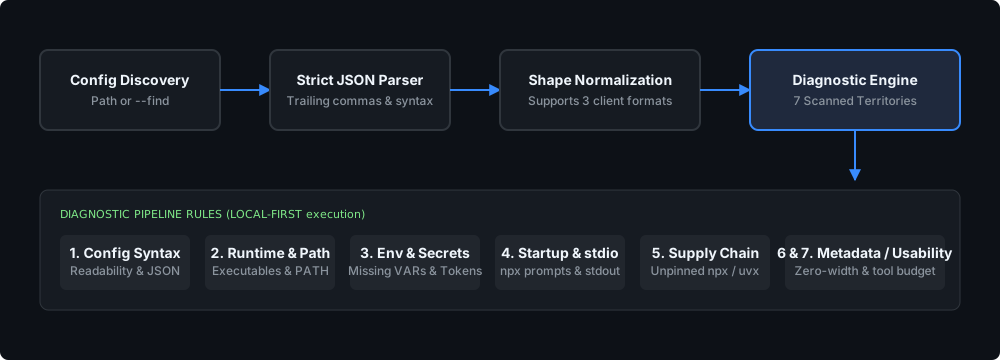
MCP Doctor operates through a multi-stage pipeline designed to parse, normalize, and audit configurations across multiple client formats (Claude Desktop, Cursor, Continue, etc.) without runtime dependencies.
Designing the finding model
To serve both interactive developers and automated CI check scripts, every finding follows a structured model:
{
  "severity": "error",
  "code": "missing-env-var",
  "server": "postgres-mcp",
  "message": "Referenced environment variable is not set: DATABASE_URL",
  "fix": "Export DATABASE_URL in your shell or specify it in client launcher env.",
  "category": "runtime",
  "confidence": "high",
  "location": "mcp.json#mcpServers.postgres-mcp.env.DATABASE_URL"
}
Diagnostic Coverage (v0.1.0 Shipped Capabilities)
- Syntax & Structure: Readability, strict JSON validation, supported server object keys
- Runtime & Executables: Binary presence, absolute path verification, script location checks
- Environment & Security: Unset variables, hardcoded API key tokens in CLI arguments
- Startup Protocol: Detection of unpinned
npx/uvxprompts andstdoutlogging risks - Supply Chain: Package version pinning verification
- Metadata & Usability: Zero-width unicode characters, confusable names, prompt budget limits
Engineering delivery & roadmap
MCP Doctor v0.1.0 was built with zero runtime dependencies using standard Node.js APIs (Node 20+). It includes a native test suite (node --test) covering 6 key failure scenarios to prevent false positives.
Open Source Availability: The project is published under the MIT license at github.com/WestsideUnion/mcp-doctor ↗